
Air Compressor Electricity Cost for a CNC Workshop: A Practical Estimate


The compressor starts before the first CNC job, runs while material is being loaded, cycles during production, sits unloaded through a setup delay and may still be running after the last part leaves the machine. That is why estimating air compressor electricity cost from motor size alone can give a workshop the wrong picture.
A better estimate uses information already available in most workshops: electrical input, actual operating hours, time spent loaded or unloaded and the electricity tariff for the period being reviewed. For a workshop considering or reviewing air compressor solutions for CNC production, those inputs are enough to build a useful first cost model without pretending that every operating hour looks the same.
The aim is not to produce a perfect laboratory measurement. It is to create a number that can be explained, checked against real operating data and improved when better measurements become available.
The useful question
Not “What is the compressor motor rating?” but “How much electrical energy does the compressor use during the way this workshop actually operates?”
Inputs Needed for an Electricity-Cost Estimate
Most workshops can start with five pieces of information. The difficulty is not collecting a long specification sheet; it is making sure each number describes the right thing.
Know what the kW figure represents
A compressor may have a clearly marked motor power, but that number should not automatically be renamed “actual electricity consumption.” The rated motor figure, compressor package input and measured electrical demand are different pieces of information.
If the manufacturer provides electrical input data, keep that with the calculation. If the controller reports energy information, record it. If a meter has been used, label the result as measured. When only nameplate information is available, the estimate can still begin, but the assumption needs to remain visible.
Do not confuse shift length with compressor operating hours
An eight-hour production shift does not automatically mean eight hours of compressor operation. The unit may be started while machines are warming up and jobs are being prepared. It may continue through lunch, programming changes, material handling or inspection. At the other extreme, automatic controls may stop the compressor during a long no-demand period.
For a meaningful estimate, record when the compressor actually starts and stops. Even a simple daily note taken over several representative shifts can reveal a large difference between scheduled production time and real compressor-on time.
Power: rated, documented or measured electrical input.
Time: actual compressor operating hours for the period.
Operating state: loaded, unloaded, stopped or variable-input behaviour.
Working days: real operating days rather than every calendar day.
Tariff: the applicable electricity charge from the relevant bill or tariff documentation.
Basic kWh Cost Framework
The arithmetic itself is simple. Electricity cost is based on energy used over time, which means the workshop first needs to turn power into kWh.
Basic calculation
kWh = kW × operating hours
Energy cost = kWh × applicable electricity tariff
That relationship works well when input power remains reasonably stable. The complication appears when the compressor runs at different electrical inputs during the same day.
A more realistic approach is to calculate loaded and unloaded periods separately, then combine them. If other operating states materially change input power, those can be added as separate lines.
Daily kWh = (loaded input × loaded hours) + (unloaded input × unloaded hours) + other recorded operating-state energy
This is why a shortcut based on full rated power for the entire shift can overstate consumption, while a calculation that counts only active compressed-air production can understate it.
Variable-speed operation needs the same basic logic but may not fit into two neat states. Where electrical input moves continuously with air demand, controller records or measured kWh can give a more representative compressor kWh estimate than forcing the machine into an assumed load percentage.
Load/Unload and Duty Pattern: Where Estimates Often Go Wrong
The compressor’s daily routine matters because CNC production rarely creates one perfectly constant air demand.
Imagine a morning with repeat work already programmed. Material is ready, machine utilisation is steady and pneumatic demand stays relatively consistent. The compressor may spend much of its running period doing useful work.
The afternoon can look completely different. A new job needs programming changes. Material is moved. Operators check the first part. A machine waits for the next sheet. Compressed-air demand falls, but the compressor does not necessarily stop immediately.
The result is a longer compressor-on period with more unloaded or reduced-load operation. The scheduled shift has hardly changed, yet the energy pattern has.
A useful observation
If two days have similar production hours but noticeably different compressor loading behaviour, do not force them into the same “average day.” Record them separately first. The difference is information.
During one representative period, record when the compressor starts, when it stops and how the load unload cycle behaves. Controller data are preferable where available, but even a disciplined operating log can show whether long idle periods are being hidden inside total runtime.
This article is deliberately not recalculating workshop CFM capacity. Air demand and compressor sizing are separate questions. Here, duty pattern matters only because it changes how much electrical energy is consumed for the production period being costed.
Where the wider CNC operating environment, controller records or supported auxiliary equipment need a broader review, CNC Laser Durban’s technical support page provides a direct route for discussing supported CNC equipment and operating issues.
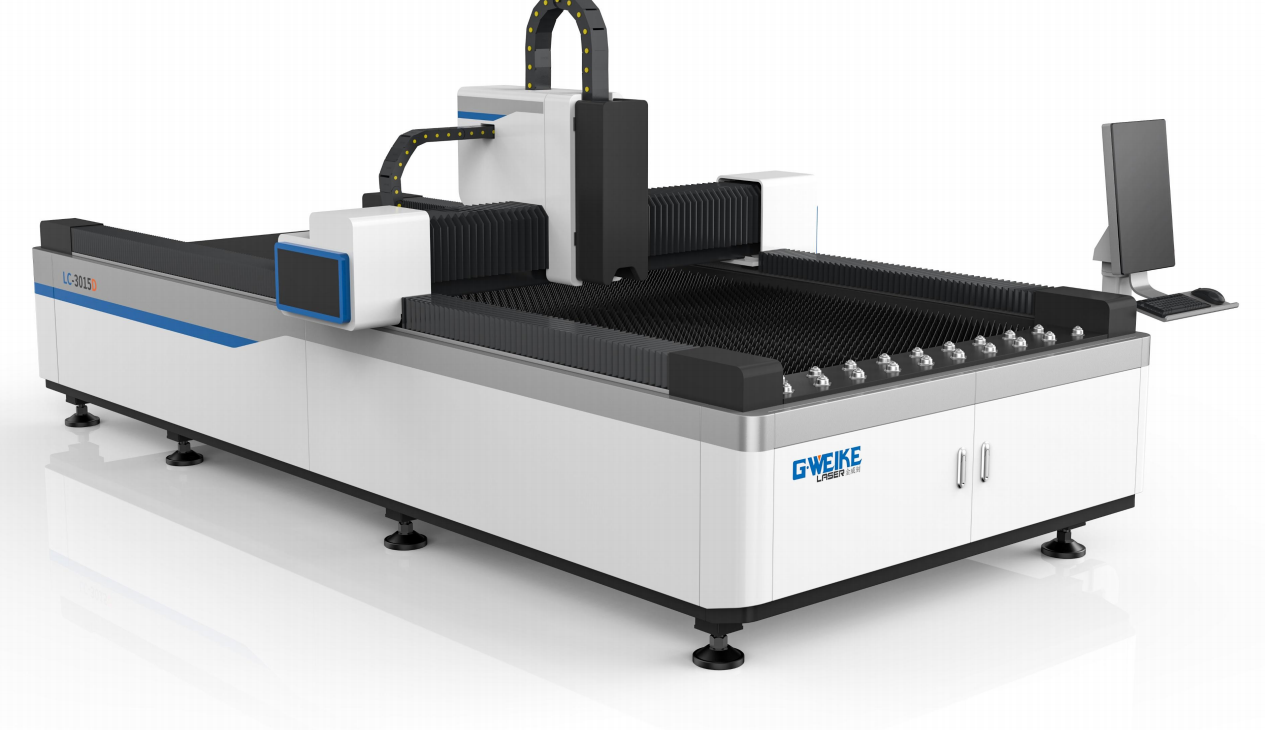
Workshop context
Compressor cost rarely sits in isolation
In a CNC production environment, compressed air may support several functions. In suitable laser cutting applications, it can also form part of the assist-gas strategy.
That changes the commercial question. A lower purchased-gas cost does not automatically mean a lower process cost if compressor electricity, drying, filtration, pressure stability and resulting cut quality are ignored.
Daily, Monthly and Per-Production-Period Views
A monthly total is useful for budgeting, but it is not always the best place to diagnose a change in CNC workshop power cost. The calculation becomes easier to understand when it is built from smaller periods.
| 01 |
Start with one normal production dayRecord real operating hours and load behaviour. This is usually the easiest level at which to notice unnecessary early start-up, long unloaded breaks or unusual overtime. |
| 02 |
Extend the result using actual working daysA monthly estimate should follow the real production calendar. Do not multiply a daily figure by every day of the month if the compressor is not operating every day. |
| 03 |
Use a production period when the workload is irregularFor high-mix work, comparing a specific shift, batch or production campaign may tell more than an “average month” assembled from very different workloads. |
For monthly budgeting
Monthly compressor kWh = representative daily kWh × actual operating days
Estimated energy cost = monthly compressor kWh × applicable tariff
Production context belongs beside the energy figure. A lower electricity bill during a quiet month is not necessarily evidence of improved compressor performance. The workshop may simply have cut fewer parts, run fewer shifts or spent less time in production.
If the estimate will be used to judge an operational change, compare periods with enough notes to explain what the workshop was doing at the time.
Cost Estimate Worksheet
One worksheet is enough. It should capture the figures needed for the calculation and, just as importantly, show which inputs were measured and which were assumed.
| Record | Workshop entry | Source / confidence |
|---|---|---|
| Compressor | Make, model, unit reference | Equipment record |
| Power information | Rated / documented / measured kW | State which one |
| Loaded operation | Input kW + hours | Controller / measurement / documentation |
| Unloaded operation | Input kW + hours | Controller / measurement / documentation |
| Operating days | Days in calculation period | Production calendar |
| Electricity tariff | Applicable energy charge | Actual bill / tariff document |
| Calculated result | Daily / monthly / production-period kWh and cost | Calculation |
| Reality check | Metered data or bill comparison | Record any unexplained difference |
Do not fill an empty cell with an invented “typical” figure just to complete the worksheet. If unloaded input is unknown, record it as not measured. If operating hours came from an operator log, state that source.
A cost estimate becomes more valuable when someone can return to it later, replace one assumption with a measured figure and immediately see why the answer changed.
What Can Distort the Estimate
A workshop can calculate the formula correctly and still see real electricity use move away from the estimate. Usually that means an operating assumption has changed.
Leaks can turn idle time into real compressor demand
Air escaping from the distribution system still has to be replaced. The compressor may load more often even when production has not increased. A cost model based on an older duty pattern may then become too optimistic.
Pressure problems can change the operating pattern
Restrictions through pipework, filters, dryers or other components can reduce pressure at the point of use. Simply raising compressor discharge pressure should not be treated as a universal fix. The actual pressure requirement and source of the loss need to be established.
Long unloaded periods are easy to overlook
A workshop may concentrate on production downtime without noticing that the compressor continues to run through that downtime. Setup delays, material waits, breaks and end-of-shift habits can all change the energy picture.
Maintenance condition can shift the baseline
Filters, coolers, control components and other system elements can affect how the compressor operates. The correct maintenance requirements depend on the actual machine and supplied documentation, so generic intervals should not be inserted into an energy calculation.
The practical response is not to keep adding assumptions. When a repeatable estimate suddenly stops matching the available evidence, investigate the operating conditions before changing the spreadsheet.
|
When the numbers stop making sense Check the operating pattern before blaming the formulaIf the same production schedule begins producing a noticeably different energy result, look for a changed load pattern, control behaviour, pressure requirement or maintenance condition. A technical review is more useful when it begins with machine identification, controller information, operating history and clear evidence rather than a single monthly cost number. |
 |
What to Send for a More Useful Review
A useful review starts with the compressor’s actual operating story. A motor rating on its own cannot show whether the machine runs continuously, unloads for long periods or changes input with demand.
Gather the compressor make and model, a clear record of the electrical nameplate and any manufacturer input-power information available. Add controller energy records or measured kW/kWh if the machine provides them.
Then add the operating side: normal start and stop times, total daily running hours, loaded and unloaded time or percentage, control mode and the real number of working days in the calculation period.
Finally, provide the electricity tariff taken from the relevant bill or tariff documentation. If the tariff structure contains additional fixed or demand-related charges, keep those separate from a simple compressor kWh calculation unless they are being analysed specifically.
The confidence of the estimate should be obvious from the worksheet.
“Measured input + controller hours + actual tariff” is a different quality of estimate from “motor rating + assumed shift hours.” Both can be useful, but they should never be presented as if they carry the same certainty.
Illustrative worked example
From One Production Day to a Monthly Cost Estimate
1. Loaded operation:
Assume 15 kW of documented electrical input for 5 hours. That part of the day uses 75 kWh.
2. Unloaded operation:
Assume 5 kW for 1 additional hour. That adds 5 kWh, bringing the illustrative daily total to 80 kWh.
3. Apply the workshop tariff:
At an illustrative R2.50/kWh, 80 kWh would equal R200 for that production day.
4. Extend only across real operating days:
At 22 operating days, the same illustrative pattern would equal R4,400 for the month. These figures are examples only, not typical compressor inputs or a current electricity tariff; replace them with the workshop’s actual data.
Frequently Asked Questions
What is the difference between kW and kWh?
kW measures power. kWh measures the energy used over time. Electricity-cost calculations require energy use, which is why operating time has to be combined with power before the tariff is applied.
Does a compressor still use electricity while unloaded?
Yes. Electrical consumption can continue while the compressor is unloaded. The actual unloaded input depends on the compressor and control system, so it should come from the equipment documentation, controller data or measurement rather than a universal assumed percentage.
How can I estimate cost when measured compressor power is not available?
Start with confirmed equipment power information and actual operating hours. Clearly label rated values and assumptions instead of presenting them as measurements. The estimate can then be updated when better power or controller data become available.
Can the calculation be used for hourly and monthly estimates?
Yes. The same kWh framework can be applied to an hour, shift, day or month. Monthly estimates should use actual compressor operating days rather than automatically multiplying by every calendar day.
When is actual power measurement worth doing?
Measurement becomes more useful when the operating pattern varies significantly, variable-speed input cannot be represented well by a simple assumption, or the preliminary calculation differs materially from available controller or billing data.
Why should the estimate be checked against the actual electricity bill?
The estimate is built from recorded inputs and assumptions. Comparing it with real energy data can expose missing runtime, a changed duty pattern, an incorrect tariff period or other electrical loads included in the comparison. The bill may also contain charges that are not part of a simple kWh energy calculation.
A Useful Estimate Should Explain the Workshop, Not Hide It
The most valuable compressor cost calculation is not necessarily the one with the most decimal places. It is the one that makes clear why the compressor consumed energy during that period.
Start with the best information already available. Separate loaded and unloaded operation where the data support it. Use actual operating days and the real tariff. Then compare the estimate with measured information when the decision is important enough to justify greater accuracy.
That process gives a CNC workshop a cost figure that can be budgeted, reviewed and challenged instead of a number produced from a motor rating and an assumed shift.
Build the estimate from actual inputs
Prepare Your Compressor Power and Operating Data
Before making an equipment or operating-cost decision, send the compressor’s rated or measured power information, normal daily operating hours, load/unload or variable-speed operating pattern, number of working days and the actual electricity tariff for the period being reviewed. These inputs make it easier to compare the compressor requirement with the way the CNC workshop actually operates, without assuming a local tariff or inventing workshop data.