How to Choose Laser Power for Sheet Metal Cutting

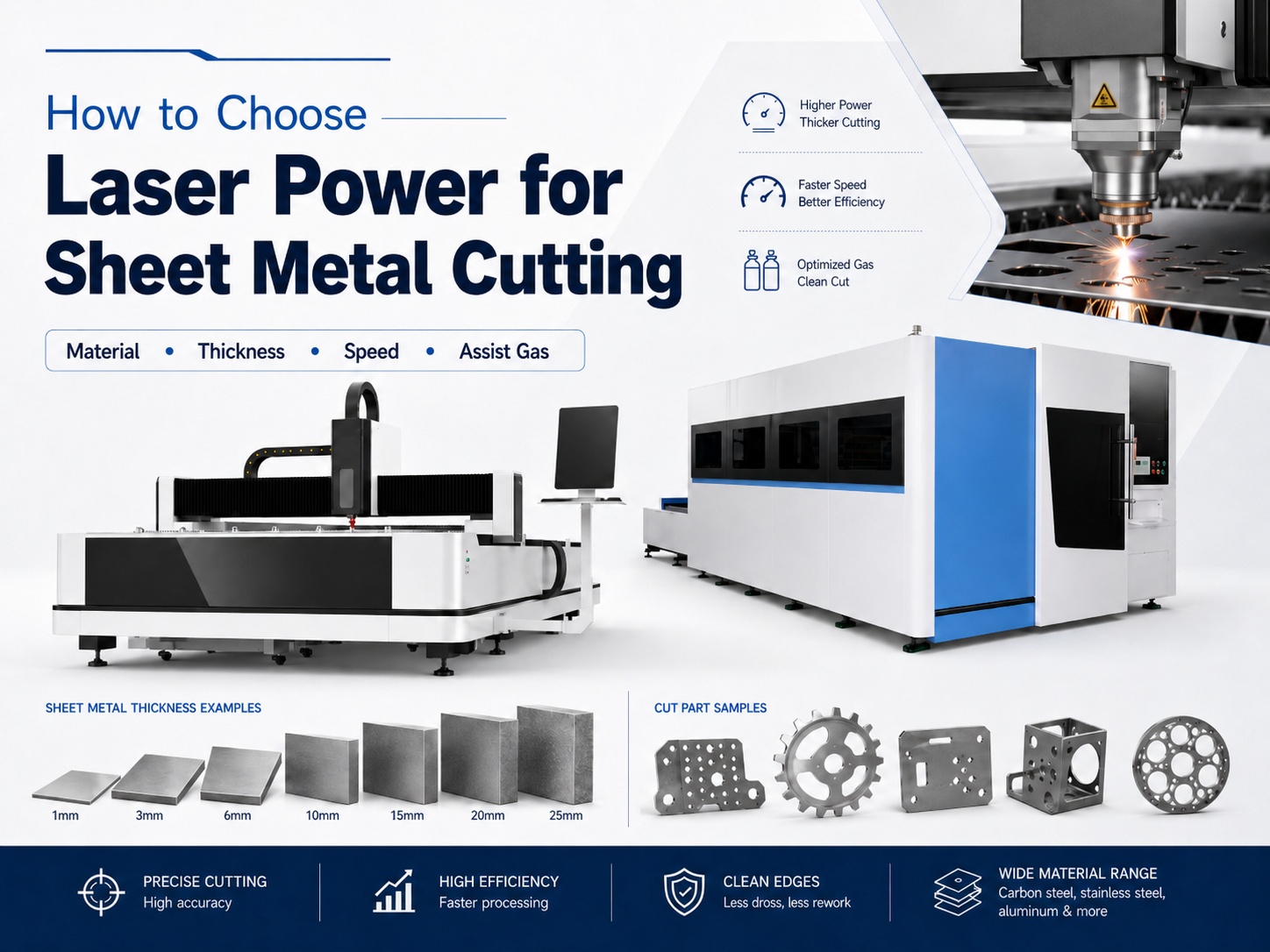
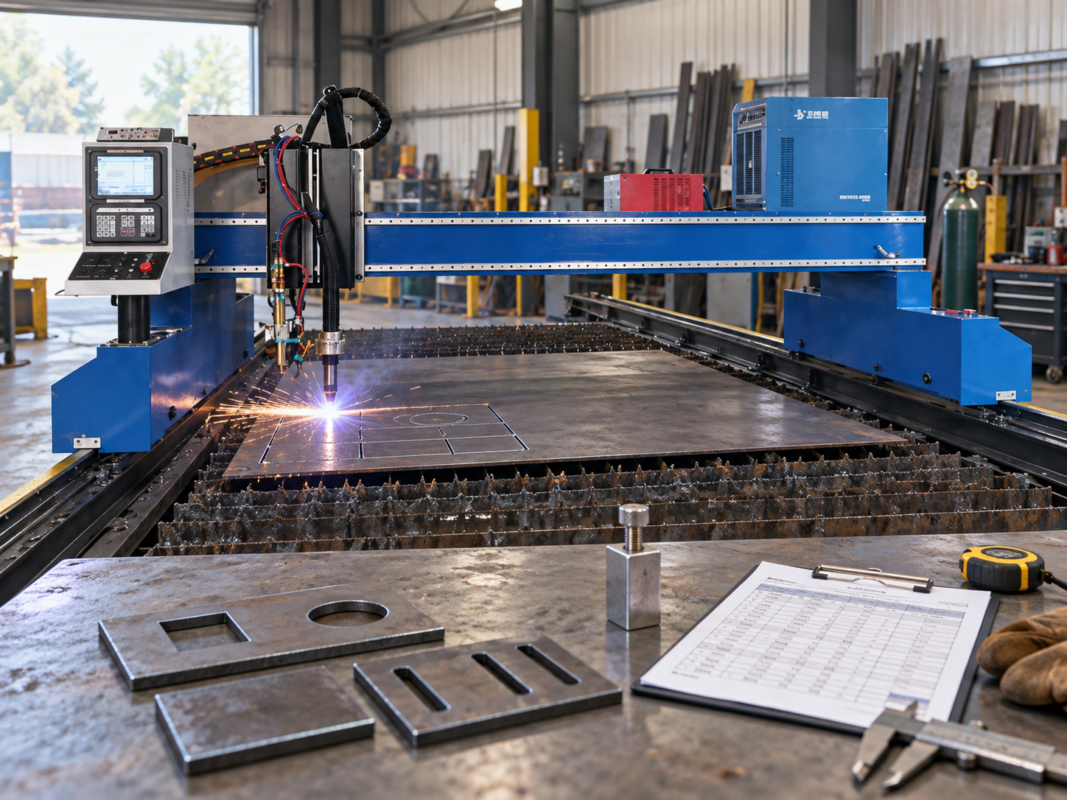
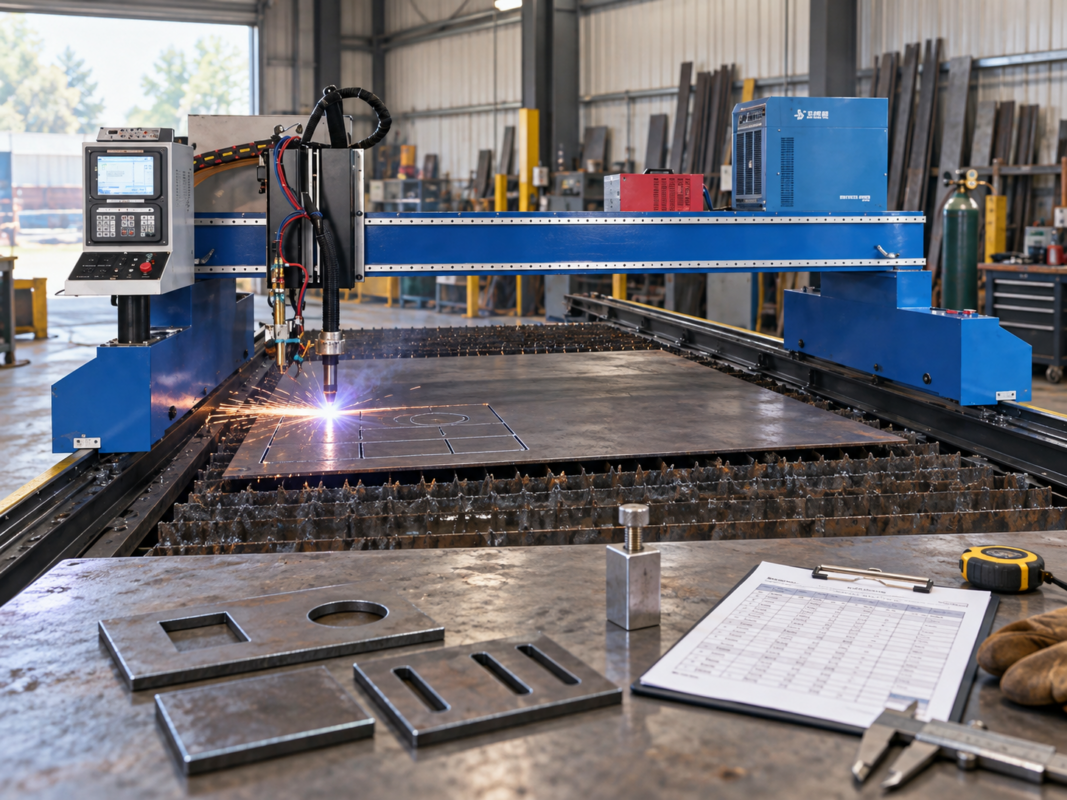
Choosing the right laser power for sheet metal cutting starts with the jobs that keep the machine busy, not the thickest plate that may appear once or twice a year. The best configuration is the one that processes your regular material mix at the required edge quality, reaches the target output per shift and works with the gas, electrical supply, extraction and handling available in your workshop.
Use the recurring thickness range to build the first shortlist, then compare nearby power classes with the same drawings, material and assist gas. The decision should be based on complete nest time and cost per accepted part rather than a catalogue cutting maximum.
A practical starting rule
Compare a lower power class when thin sheet and moderate volume dominate. Move into the middle range when mixed sheet work, repeat batches and faster full-nest output justify it. Consider high power only when demanding material, long beam-on time or multi-shift production is regular enough to use the extra capacity.
Laser Power for Sheet Metal Cutting: Which Class Should You Compare First?
A useful power discussion begins with production patterns. The table below is a shortlist guide, not a universal thickness chart. Actual capability changes with material grade, sheet condition, assist gas, cutting head, source, parameters and the edge standard required after cutting.
| Production profile | Power class to compare | What should prove the choice | Main buying risk |
|---|---|---|---|
| Thin sheet, lighter duty | Start with a lower-power platform, including the 1–1.5 kW class where the proposed machine supports it. | Complete nest time, small-hole quality, corner condition, heat control, loading time and acceptable gas cost. | Buying extra source capacity while motion, programming or handling remains the real limit. |
| Mixed sheet, repeat batches | Compare the middle range, often around 3–6 kW, against the next lower option using the same production files. | Stable quality across common materials, lower full-cycle time, reliable piercing and a measurable cost-per-part improvement. | Choosing from maximum thickness alone and underestimating nitrogen, compressed-air or electrical requirements. |
| Demanding work, high utilisation | Compare 8 kW and above only when repeated heavier material, long contours, larger formats or multi-shift production supports it. | Recorded shift output, pierce reliability, edge acceptance, gas-flow stability, extraction, cooling and downstream capacity. | Paying for output the workshop cannot feed, unload or process after cutting. |
| Rare thick-plate requests | Compare outsourcing with a balanced lower configuration before moving into a higher power class. | Annual hours, order margin, delivery pressure, rejection risk and the cost of keeping unused capacity. | Allowing one occasional job to define the full machine investment. |
Important: These ranges help organise the first comparison; they do not guarantee a material or thickness capability. Ask the supplier to confirm the exact machine, source, cutting head, assist gas and sample result in writing.
Do not confuse maximum cutting with commercial production
A machine may separate a material at the edge of its stated range yet still produce slow piercing, heavy dross, unstable corners or too much finishing. A commercially useful result must meet the required edge condition repeatedly and leave enough capacity to complete the planned shift.
Ask for two results when a maximum thickness matters: the best verified sample and the repeatable production result. The second figure is the one that belongs in the investment calculation.
Match Power to the Material and Thickness That Generate Most Cutting Hours
A monthly material summary is more useful than a list of everything the business has ever quoted. Record the percentage of cutting hours in each material and thickness band. This shows whether the investment should favour fast thin-sheet production, a balanced mixed workload or repeated demanding plate.
Mild steel
Separate clean sheet, scaled plate and galvanised stock. Oxygen may support selected work but leaves an oxidised edge; nitrogen or compressed air can change both finish and operating cost.
Stainless steel
Edge oxidation, heat tint and finishing requirements can be more important than headline speed. Include normal protective film and the actual grade in the test material.
Aluminium
Heat movement, burr, narrow webs and small holes need attention. A straight sample does not prove that dense production nests will remain stable.
Copper, brass, coated sheet and other specialised materials should be confirmed against the exact source and cutting system. Do not assume a result demonstrated on mild steel will transfer to another metal. Where specialised work is low volume, compare annual subcontracting cost with the extra machine and infrastructure required to bring it in-house.
Geometry changes the power benefit
Two parts in the same material and thickness can create very different cycle times. A large panel with a few pierces can benefit more directly from higher cutting speed. A dense nest of small brackets may spend much of the cycle piercing, accelerating, slowing for corners and moving between short contours.
Include these features in the sample file
• Narrow slots and internal corners
• Closely spaced contours
• Thin bridges and narrow webs
• Typical pierce count per sheet
• The usual nesting density
Check Whether More Power Will Remove the Real Production Bottleneck
A higher source rating creates value when cutting and piercing control the schedule. It creates less value when the machine waits for programming, material, loading, unloading or the next operation. Measure one normal week before approving the upgrade.
More power is likely to help when
- Active cutting and piercing occupy most of the available production time.
- Repeat orders miss targets because contour or pierce time is too long.
- Regular material is processed close to the practical limit of the current setup.
- The next sheet and downstream process are ready before the laser finishes.
- A higher-power test shows a clear full-cycle saving on the same accepted parts.
Fix another constraint first when
- The machine frequently waits for drawings, nesting or material preparation.
- Gas pressure, nozzles, optics or sheet quality cause unstable cutting.
- Manual unloading and sorting delay the next sheet.
- Deburring, bending, welding or coating already has the larger backlog.
- The heavier work used to justify more power is rarely ordered.
Calculate whether the upgrade can pay for itself
Use real order data rather than an ideal cutting-speed percentage. Estimate the time saved on a representative nest, multiply it by the number of similar nests per month, then account for finishing, gas, electricity, finance and any added handling requirement.
| Monthly comparison input | Current / lower power | Proposed higher power | Difference to value |
|---|---|---|---|
| Complete time per representative nest | Record test result | Record test result | Minutes saved × nests per month |
| Accepted parts and finishing time | Grinding, cleaning, rework | Grinding, cleaning, rework | Labour and rejected-part difference |
| Gas, electricity and consumables | Monthly operating estimate | Monthly operating estimate | Added or reduced monthly cost |
| Extra capital and site work | Quoted project cost | Quoted project cost | Difference ÷ monthly net benefit |
If the calculated gain depends on perfect utilisation or future work that has not been secured, treat the payback estimate as high risk. Spare capacity is useful when it supports a defined growth plan, not when it is only described as “future-proofing.”
Compare Assist Gas and Edge Quality Before Approving More Power
Assist gas changes edge chemistry, molten-metal removal, piercing behaviour and running cost. A high-output source cannot deliver the expected result when the gas system cannot maintain the pressure and flow used during the demonstration.
Oxygen
May suit selected mild-steel cutting, but the edge normally carries oxidation. Check whether cleaning is needed before coating, welding or finishing.
Nitrogen
Can support an oxide-free edge in suitable applications. Confirm pressure, flow, supply format and consumption at the intended production volume.
Compressed air
Can be economical for selected work, but compressor electricity, drying, filtration, pressure stability and edge acceptance remain part of the calculation.
Define the edge before comparing speed
“Clean cut” is too vague for machine approval. State what the next process will accept. A visible stainless panel, a bracket going directly to powder coating and a structural part that will be ground before welding can have different standards.
Record these acceptance points
• Oxide and discolouration
• Taper and squareness
• Hole and corner condition
• Dimensional consistency
• Finishing required after cutting
Run the Same Test Before Buying Each Power Option
A useful demonstration reproduces the work you intend to sell. Use your normal material, representative drawings and agreed acceptance criteria. A simple rectangle or one carefully prepared sample cannot show daily productivity or repeatability.
01 — Use normal stock
Match the grade, thickness, surface condition, scale, coating or protective film used in production.
02 — Test a complete nest
Include common parts, difficult features, realistic spacing and the normal number of pierces.
03 — Fix the gas route
Record gas type, pressure, supply arrangement and any compressor or filtration requirement.
04 — Measure the whole cycle
Include loading, piercing, cutting, unloading, sorting, inspection and secondary finishing.
05 — Record intervention
Note failed pierces, alarms, nozzle cleaning, parameter changes and operator adjustments.
06 — Repeat the test
Several consistent sheets provide better evidence than one successful demonstration.
| Test result | Power option A | Power option B | Approval question |
|---|---|---|---|
| Complete nest time | Record minutes | Record minutes | Is the shift-level saving commercially meaningful? |
| Edge and feature quality | Record burr, taper, holes, corners | Record burr, taper, holes, corners | Can parts move to the next process without extra work? |
| Gas and interventions | Record use and operator actions | Record use and operator actions | Will the workshop reproduce the demonstrated conditions? |
| Repeatability | Record several sheets | Record several sheets | Does the result remain stable without special preparation? |
The final quotation should identify the source, cutting head, working area, included gas and extraction requirements, electrical supply, software, installation, training, maintenance responsibilities and acceptance test. Broader machine-format and support questions are covered in the fiber laser cutting machine buying guide.
Machine Examples for Different Power and Production Directions
These product pages provide two useful comparison points within the current machine range. Treat the listed specifications as a starting point and confirm the supplied configuration, application capability and sample-cut result in the formal proposal.
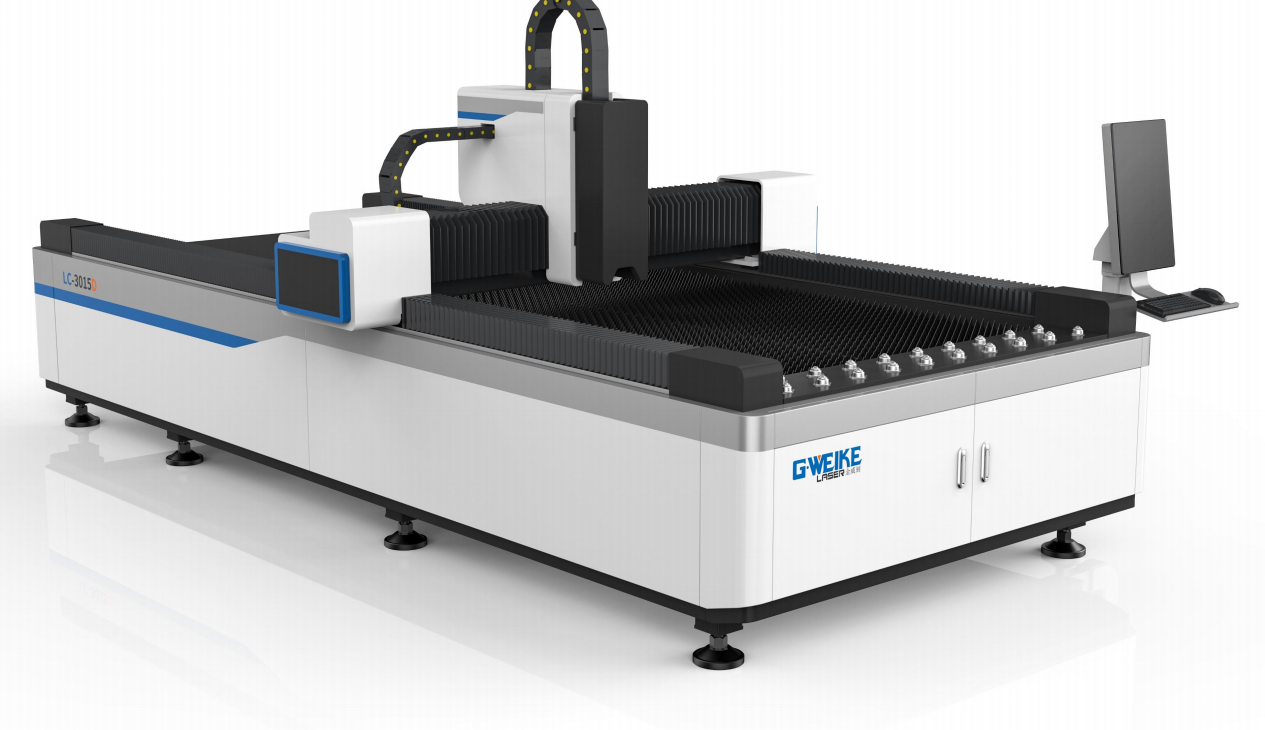
LF3015E II: lower-power standard sheet format
The product page lists 1000W and 1500W laser options with a 3000 × 1500 mm working area. It is a relevant starting point for buyers comparing standard sheet work and a lower power class.
Confirm normal material thicknesses, full-nest speed, gas route, edge quality and the exact included configuration before approval.
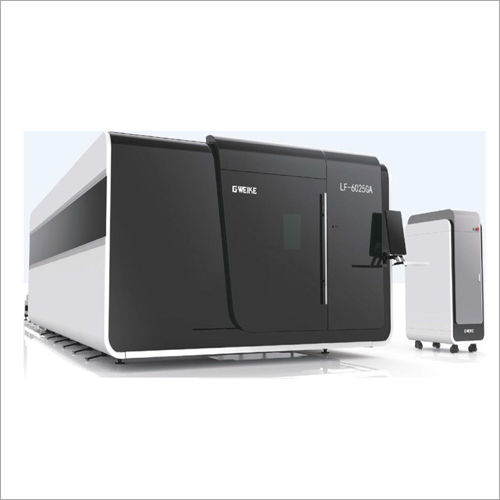
GH Series: higher-power whole-cover format
The product page lists 3000W to 20000W options and 4000 × 2000 mm or 6000 × 2500 mm working areas. It is a comparison point for larger formats, repeated demanding work and higher utilisation.
Confirm site access, electrical supply, gas capacity, extraction, loading, downstream production and the exact power option being quoted.
What to send for a focused recommendation
Prepare enough information for the sales team to compare the machine against real production rather than only a requested wattage.
• Representative drawings and monthly quantities
• Required edge and next manufacturing process
• Standard sheet size and largest recurring part
• Gas, electricity, extraction and floor-space details
• Current bottleneck and planned shift pattern
Seven Questions That Should Be Answered Before the Order Is Approved
A power recommendation is ready for approval only when the technical result, production value and site requirements point in the same direction. Use these questions to identify gaps in the proposal.
1. Which thicknesses drive the decision?
The proposal should identify the common range, regular maximum and rare maximum separately.
2. What full-cycle improvement was measured?
Record nest time and accepted output rather than relying on a straight-line cutting-speed claim.
3. Is the demonstrated edge acceptable?
The sample should meet the requirements of bending, welding, coating, assembly or visible finishing.
4. Can the workshop reproduce the gas conditions?
Pressure, flow, drying, filtration, storage and supply continuity should match the test process.
5. Can loading and downstream work keep pace?
Extra cutting output has limited value when unloading, sorting, bending or welding becomes the new delay.
6. Is future capacity supported by evidence?
Contracts, repeated enquiries or a defined product plan provide a stronger case than a general growth expectation.
7. Does the written quotation match the demonstrated machine?
Confirm the exact source, cutting head, controller, working area, auxiliary equipment, software, installation scope, training, acceptance test, warranty conditions and exclusions. A demonstration is only useful when the supplied configuration matches the one that produced the result.
Frequently Asked Questions
Compare Power Options Against Your Actual Parts
Send your material list, common thicknesses, sample drawings, expected volume, assist-gas plan and workshop information. A focused application review can then compare power classes, machine formats and test-cut requirements without relying on a generic thickness chart.