How to Choose a Handheld Laser Welder for Your Workshop

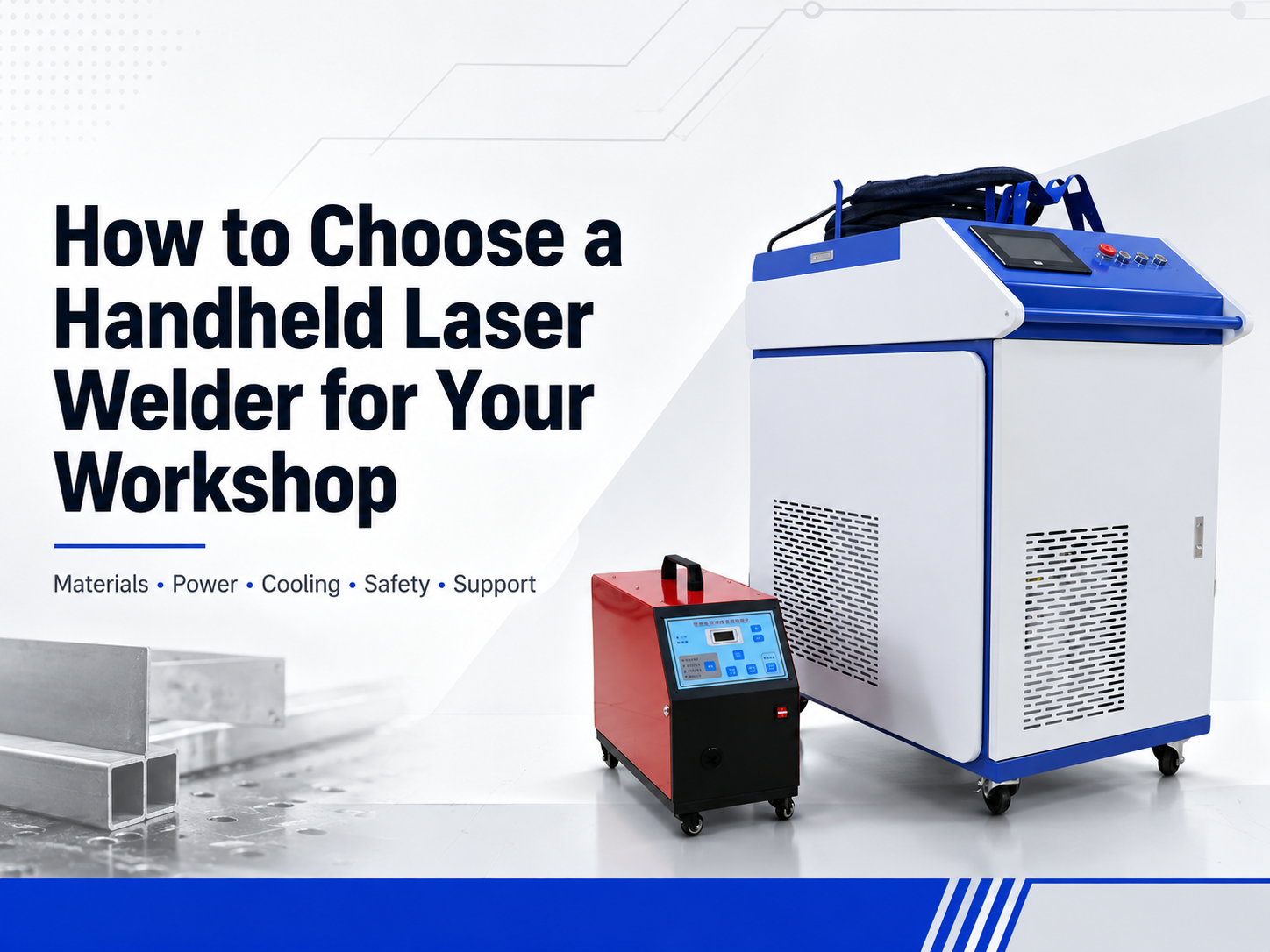
Choosing a laser welder starts with the parts you produce every day. Materials, joint fit-up, production volume, cooling, wire feeding, workshop services, operator training and technical support all need to be considered before a machine is approved.
Article Directory
Selecting a handheld laser welder is easier when the decision begins with normal workshop work rather than the largest available power figure. Record the materials, thickness ranges, joint types, batch sizes, finishing requirements and common causes of rework before comparing machines.
Representative parts also need to be tested before an order is placed. A recorded demonstration gives you stronger evidence than a general thickness chart because it shows how the proposed system performs with your actual preparation, fixtures, gaps, access restrictions and inspection requirements.
What matters most
Choose the configuration that produces repeatable accepted welds on your regular parts, fits the available workshop services and includes suitable operator training. Extra power or optional functions are useful only when they solve a clear production requirement.
1. Choose a Handheld Laser Welder Around Actual Workshop Jobs
List the jobs that currently consume the most welding and finishing time. Include repeat batches, visible seams, thin fabricated assemblies and components that require substantial grinding, polishing or straightening after welding.
Define the main result you want from the new process. The priority may be lower distortion, cleaner visible seams, shorter cycle times, reduced finishing work or more consistent output between operators. This gives the machine demonstration a clear purpose.
One unusual maximum-thickness job should not control the complete machine specification unless it is repeated and commercially important. Otherwise, excess capacity may increase the purchase price and electrical demand without improving normal production.
When this equipment category is worth evaluating
- Regular thin-sheet or fabricated-metal production
- Visible welds that require a controlled appearance
- Parts where distortion creates repeated rework
- Cabinets, frames, enclosures and similar assemblies
- Jobs where grinding and polishing use significant labour
- Workshops prepared to introduce training and laser safety controls
When another welding process may remain more practical
Wide gaps, highly variable preparation and heavy structural joints may still favour MIG, TIG or another established process. The same applies where a joint is already covered by a qualified welding procedure that cannot simply be replaced.
A site that cannot yet provide controlled access, suitable extraction or trained operating procedures may need further preparation before installation. Laser welding is best evaluated as a controlled production method rather than a universal replacement for every existing process.
2. Define Materials, Thickness Ranges and Joint Types
Material information needs to be specific. Record the metal family, grade where known, regular thickness range and surface condition. Oil, oxide, paint, plating or mill scale may affect preparation, process stability and fume-control requirements.
Joint design matters as much as material thickness. Butt, lap, corner and fillet joints create different demands for access, fit-up and filler wire. Complete assemblies usually provide more useful evidence than ideal flat test plates.
Measure normal fit-up
Measure the gaps, edge mismatch and cutting quality found after normal fabrication. Testing only perfectly prepared parts can create an unrealistic impression of daily performance. Include ordinary production variation in the sample pack.
Where gaps vary widely, better cutting accuracy, improved bending control or dedicated fixtures may offer more value than a more complicated machine package. Filler wire can support suitable joints, but it should not become a substitute for uncontrolled preparation.
Define the required weld result
A cosmetic seam, sealed joint and load-bearing component may require different inspection methods. Appearance alone does not confirm penetration, strength, leak tightness or repeatability.
Agree on the acceptance method before the trial begins. Visual inspection may be sufficient for some non-critical work, while other parts may require sectioning, bend testing, leak testing or review by the responsible engineer.
Useful demonstration samples
- The most common material and thickness
- The thinnest regular component
- A commercially important thicker component
- A visible cosmetic joint
- A joint with normal gap variation
- A part expected to require filler wire
- A component with restricted welding-head access
3. Match Power and Duty Cycle to Production Demand
Laser power needs to match demonstrated parts, required travel speed and weld acceptance criteria. A higher nominal rating may increase capability, but it cannot correct unstable fit-up, poor preparation or unsuitable process settings.
During the trial, record the material, thickness, joint type, preparation, filler status, settings and inspection result. This process record is more useful than a broad statement that a machine can weld a particular thickness.
Measure the complete production cycle
Production time includes loading, positioning, tacking, welding, inspection and unloading. Grinding, straightening and polishing time also need to be compared before and after the test.
A faster weld may provide limited value if fixture setup remains slow. On the other hand, reduced distortion and less finishing can create substantial savings even when welding speed is not the only improvement.
Confirm workload and workshop conditions
Shift length, batch size and repeated production affect cooling and thermal demand. Explain both normal and peak workloads so the proposed configuration can be assessed under realistic operating conditions.
Workshop temperature, humidity, airborne grinding dust and ventilation space also matter. Confirm suitable clearances, cleaning routines and operating limits before the final layout is approved.
4. Check Cooling, Wire Feeding and the Welding Head
Cooling system
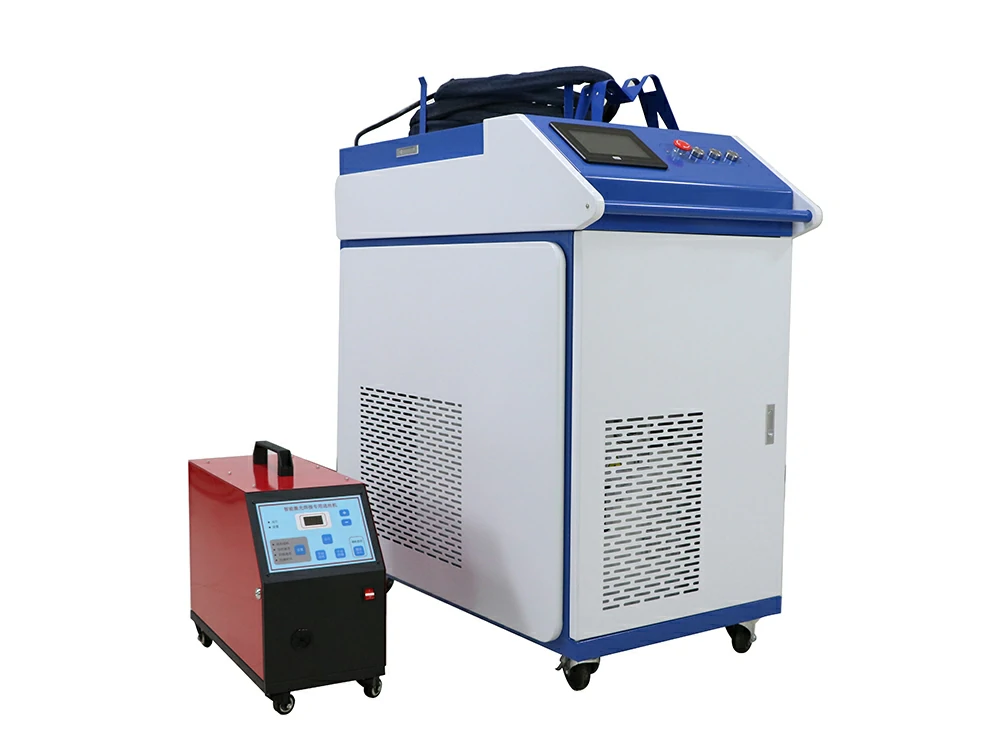
The quotation needs to identify the exact cooling arrangement for the supplied machine. Confirm coolant requirements, ventilation clearance, alarm behaviour, routine cleaning and maintenance access before installation.
Cooling equipment must remain accessible and should not be placed where airflow can be blocked by stored material or heavy grinding dust. The operating manual should define the required checks and maintenance schedule.
Wire feeder
Filler wire may help where an approved joint requires additional material. It is not required for every application and should not be treated as a universal solution for poor fit-up.
Where a feeder forms part of the proposal, confirm compatible wire sizes, feed adjustment, alignment, rollers, guides and supplied accessories. Local wire availability and suitable storage also form part of the operating plan.
Welding head
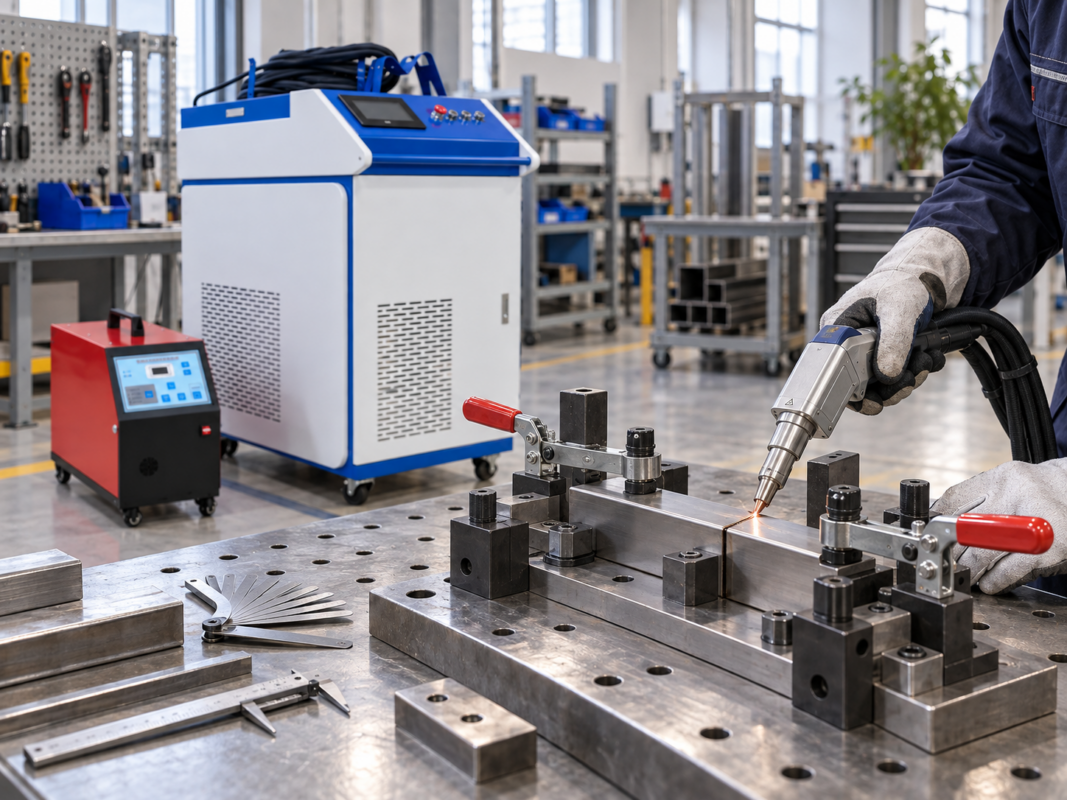
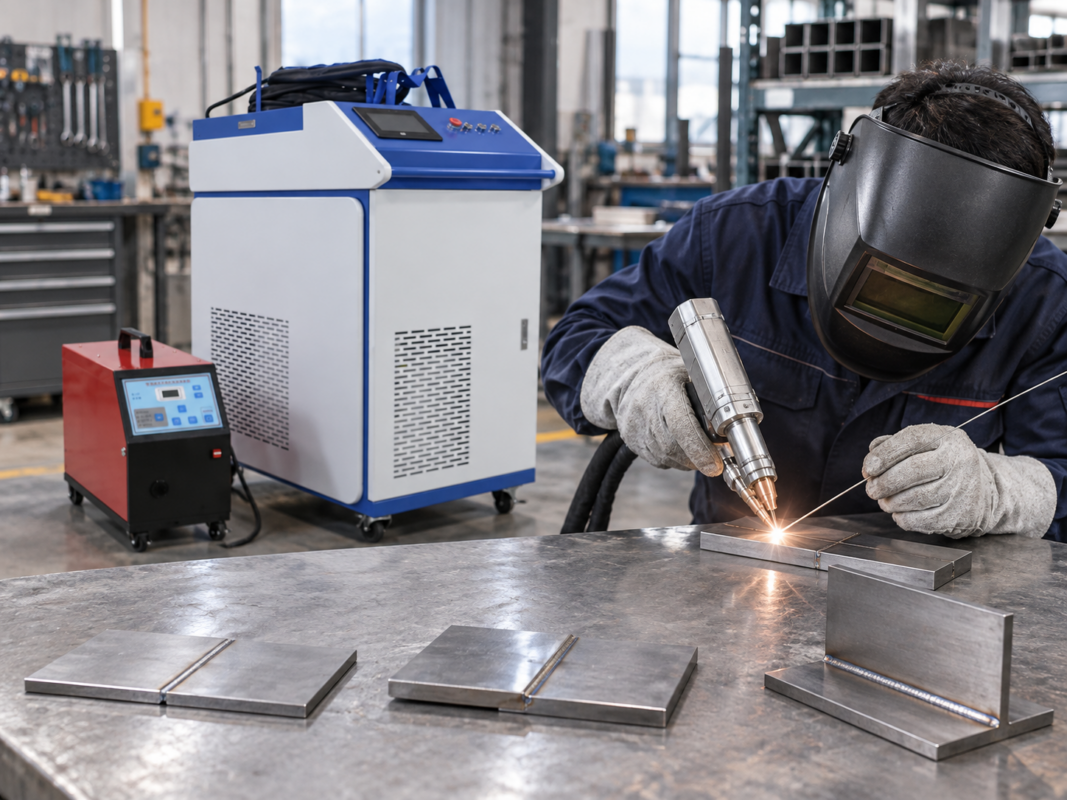
Ask an intended operator to assess the welding head during the demonstration. Balance, grip, cable movement and access can affect control during long batches and work inside frames, cabinets or restricted corners.
Nozzle access and cable reach also matter. A head that performs well on an open test plate may be difficult to position inside a real fabricated assembly.
Confirm every supplied function
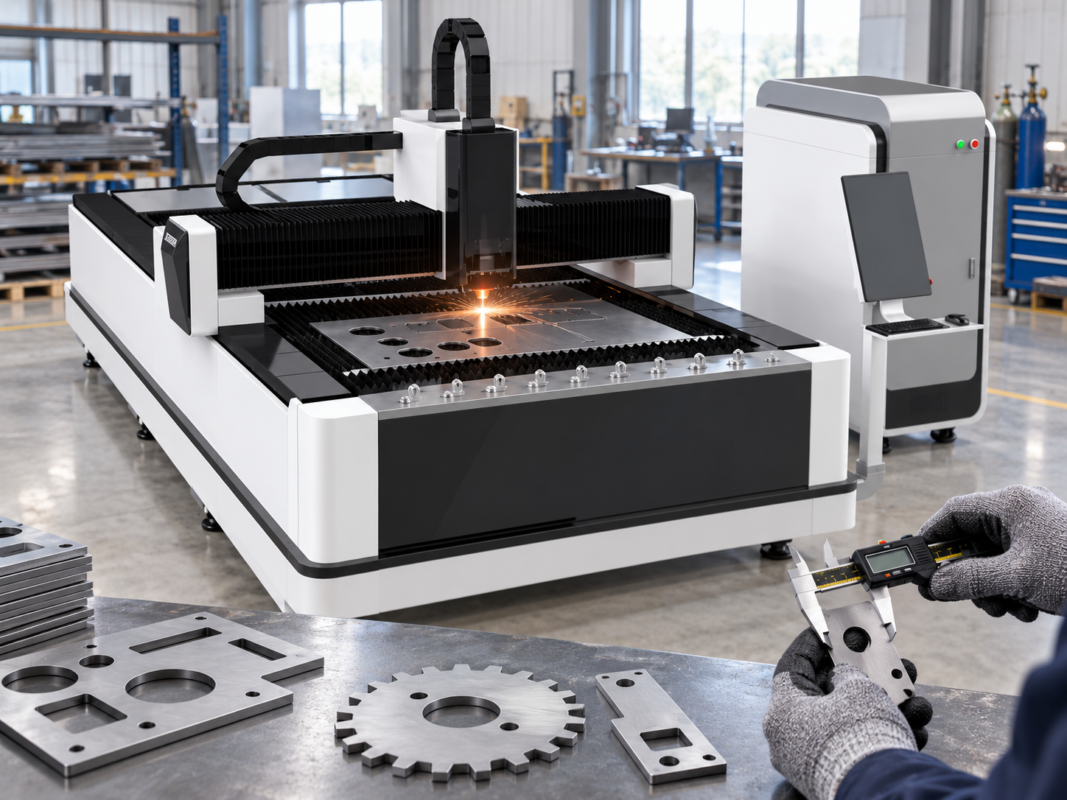
Welding, cleaning and cutting functions need to be listed separately in a multifunction quotation. Confirm the supplied heads, nozzles, lenses, controls, accessories and training for each required mode. Occasional cutting capability is not automatically a replacement for a dedicated production cutting machine.
Test the Machine with Representative Parts
Bring regular materials, realistic gaps and commercially important joints to the demonstration. The results can then guide the final power level, accessory package and training scope.
View Laser Welding Machines |
Request a Demonstration |
5. Confirm Electricity, Extraction and Safe Installation
The final quotation needs to state the voltage, phase, frequency, connected load and protection requirements. A qualified electrician can then assess distribution-board capacity, isolation, earthing and cable routing.
Generator or backup-power compatibility also needs confirmation where relevant. A nearby socket does not automatically prove that the available electrical supply is suitable for the complete system.
Create a controlled operating area
Laser operation requires a task-specific risk assessment. Barriers, controlled access, suitable protective eyewear, warning systems and emergency procedures must match the actual machine and workstation.
Reflective metal surfaces also require attention. Workpieces, fixtures and nearby equipment may create unwanted reflection paths, so the workstation layout needs to be reviewed by a competent person before routine operation.
Plan suitable fume extraction
Extraction must suit the metals, coatings, oils and other surface contamination being processed. Local exhaust needs to capture airborne contaminants close to the weld without disturbing shielding gas or process stability.
The installation also forms part of the site’s broader workplace safety programme. The South African Occupational Health and Safety Act provides general regulatory context for plant, machinery and workplace safety.
6. Review Training, Warranty and Technical Support
Training needs to extend beyond startup and shutdown. Practical instruction should cover material preparation, parameter selection, head handling, wire feeding where included, weld inspection, alarm response and routine maintenance.
Confirm who will receive training, where it will take place and how practical competence will be assessed. Follow-up assistance can also be valuable after the first production batches.
Create an approved parameter library
Record accepted settings by material, thickness, joint type and filler condition. Each entry can include preparation, fixture details, process settings, inspection results and a photograph of the accepted seam.
Begin with demonstrated workshop jobs rather than unverified settings copied from another application. Controlled records make repeat work easier to manage across operators and shifts.
Clarify warranty and service responsibilities
Warranty terms need to identify covered components, exclusions, maintenance duties and service procedures. Consumable availability, technical escalation and site-service arrangements also need to be understood before commissioning.
CNC Laser Durban’s technical support services provide a route for discussing setup, servicing, repairs and preventative maintenance.
7. Workshop Selection Checklist
Complete this checklist before a demonstration or quotation. It keeps the discussion focused on the installed production process rather than only the headline machine price.
| Selection Item | Workshop Information | Confirm Before Ordering |
|---|---|---|
| Materials | Metal types, grades and surface condition | Suitability based on representative trials |
| Thickness | Common, minimum and important maximum range | Tested process range and inspection results |
| Joints | Butt, lap, corner, fillet and access limits | Fit-up, preparation and filler requirements |
| Workload | Batch size, daily hours and peak demand | Cooling, workload and operating limits |
| Wire Feeding | Expected gaps and filler requirements | Feeder type, wire sizes and accessories |
| Cooling | Ambient heat, dust and ventilation space | Cooling arrangement and maintenance needs |
| Safety | Controlled area, extraction and access plan | Supplied controls and site responsibilities |
| Electricity | Available voltage, phase and board capacity | Connected load, protection and isolation |
| Training | Operator numbers, roles and experience | Practical scope, duration and sign-off |
| After-Sales | Maintenance and downtime requirements | Warranty, consumables and support process |
Questions to ask before accepting a quotation
- Which exact laser source, welding head, cooling system and feeder are included?
- Which materials, thicknesses and joints were demonstrated?
- How will the accepted settings and inspection results be recorded?
- Which electrical, gas, extraction and safety work remains the workshop’s responsibility?
- Which consumables and replacement parts are supplied?
- What practical training and competence checks are included?
- Which components are covered by warranty?
- How will installation, commissioning and final acceptance be documented?
Frequently Asked Questions
How should laser power be selected?
Base the decision on tested materials, thicknesses, joints, required production speed and accepted inspection results. Do not select a machine from its maximum-thickness claim alone.
Is a wire feeder always required?
No. Its value depends on joint fit-up, reinforcement requirements and the approved process. Test representative parts with and without filler wire where appropriate.
What should be checked in the cooling system?
Confirm the cooling type, coolant requirements, ventilation clearance, alarm behaviour, cleaning routine and maintenance schedule for the exact quoted configuration.
Can a 3-in-1 machine replace a dedicated laser cutter?
Not in every application. Confirm the supported cutting mode and intended use of the quoted machine. Occasional cutting capability is different from a dedicated production cutting system.
What electrical supply is required?
Requirements vary by configuration. Voltage, phase, connected load, protection and earthing need to be stated in the quotation and reviewed by a qualified electrician.
How long should operator training take?
Training time depends on operator experience, part complexity and the supplied functions. Practical competence on representative parts is more important than a fixed number of hours.
What routine maintenance should be planned?
Routine work may include cleaning, cooling checks, cable inspection and protective-optics or consumable inspection. The delivered equipment manual must define the exact schedule.
Related CNC Laser Durban Resources
Laser Welding EquipmentCompare available laser welding and multifunction machine options. |
Technical SupportReview servicing, repairs, preventative maintenance and technical assistance. |
Industrial MachineryExplore CNC equipment for cutting, welding and industrial production. |
Make the Final Decision from Demonstrated Results
A suitable system needs to match regular parts, realistic fit-up, production demand and available workshop services. It also needs clearly defined safety responsibilities, operator training and after-sales support.
Before approving an order, complete three practical steps:
- Prepare representative parts and define the required weld result.
- Complete the workshop checklist before comparing quotations.
- Approve the order after a recorded demonstration and written configuration review.
The right handheld laser welder is the system that produces repeatable accepted parts, fits the installed environment and gives operators the training and support needed for controlled production.
Discuss Your Welding Application
Send your material list, thickness range, joint photographs or drawings, expected workload and available workshop services. This information helps prepare a useful demonstration and a more suitable machine proposal.
Request a Demo or Quote |
Compare Laser Welders |