Handheld Laser Welder vs MIG and TIG Welding

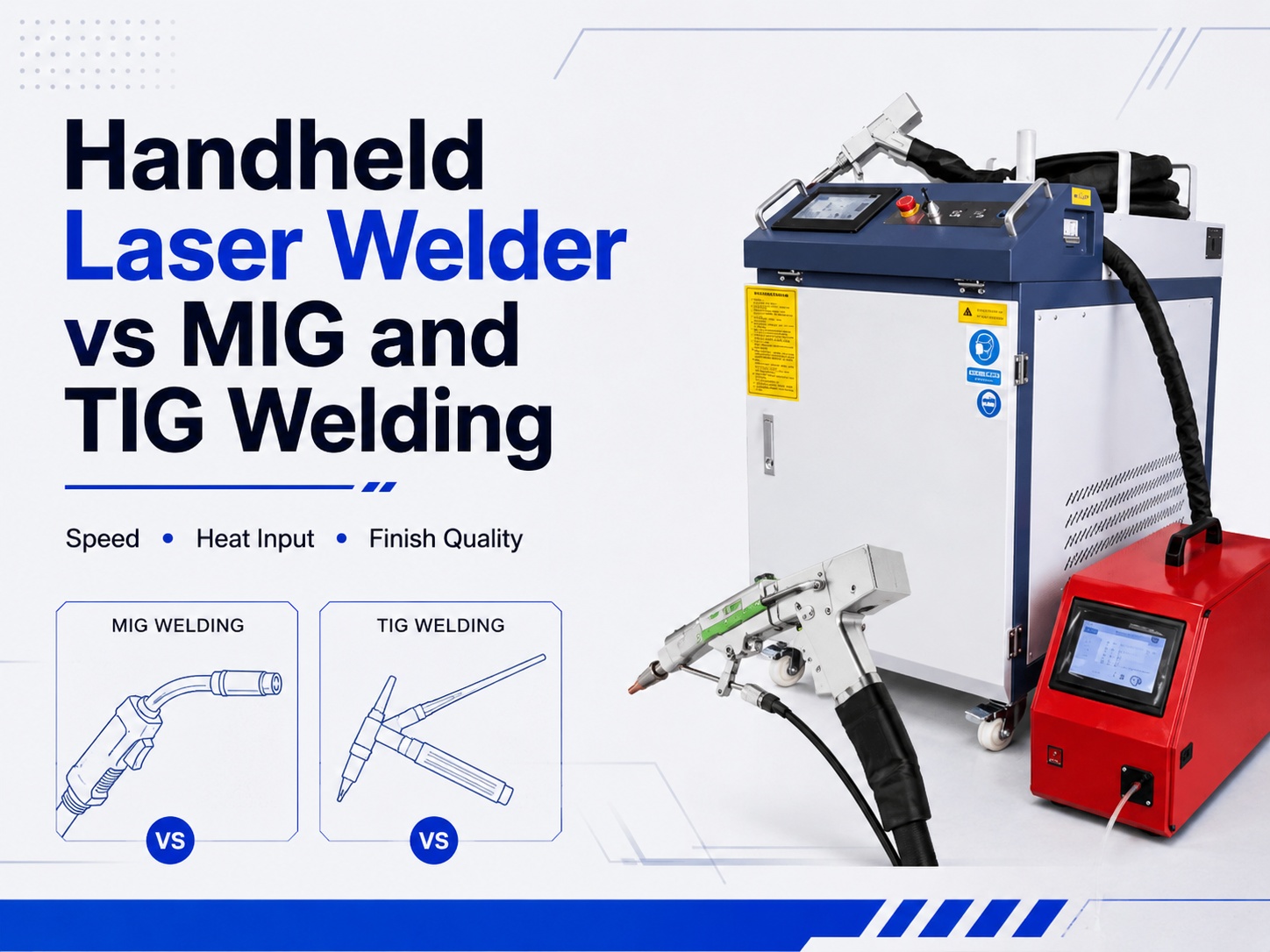
Compare real jobs, joint quality, production demand, machine configuration, site services, safety controls and supplier support before approving a system.
Article Directory
Learning how to choose a handheld laser welder starts with the parts your workshop produces every week. Material grade, thickness, joint design, fit-up, access, finish standard and batch size should define the buying brief before power or optional functions are discussed.
The most reliable purchasing decision comes from three forms of evidence: representative sample parts, a written record of the tested configuration and a quotation that clearly separates what the supplier provides from what the workshop must prepare.
Direct selection answer
Choose the smallest practical configuration that repeatedly produces accepted welds on normal production parts, works with the available site services and includes the training and support needed for controlled operation. Do not let a rare maximum-thickness job or an unverified feature list dictate the entire purchase.
1. Decide Whether a Handheld Laser Welder Fits the Work
A handheld laser welder is most useful when the workshop has repeatable metal fabrication, controlled part preparation and a clear reason to change the existing process. The business case may come from reducing distortion, limiting finishing work, improving consistency on visible seams or shortening the complete production cycle.
The decision should not begin with the assumption that laser welding will replace every MIG or TIG task. Heavy structural joints, wide or unpredictable gaps, poor access and inconsistent preparation may still suit an established process better.
Good reasons to evaluate the process
- Repeat thin-sheet or fabricated assemblies
- Visible seams with a defined appearance standard
- Distortion that creates regular straightening or rework
- Grinding and polishing that consume meaningful labour
- Stable cutting, bending, fixturing and part fit-up
Reasons to pause or keep another process
- Large and unpredictable joint gaps
- Heavy structural work requiring a qualified procedure
- Parts that cannot be reached safely with the supplied head
- No suitable controlled area or fume extraction plan
- No internal owner for training, maintenance and process records
This first screening prevents a common buying mistake: selecting an impressive machine and then trying to find work for it. A better approach is to define the production problem and test whether the proposed system solves it.
2. Build a Job Matrix Before Comparing Machines
A useful buying brief describes more than metal type and maximum thickness. It records the actual range of work the machine must handle, including the parts that create the most labour, rework or delivery pressure.
Record these details for each priority job
- Material: metal family, grade where known, surface condition and any coating, oil, oxide or mill scale.
- Thickness: normal range, thinnest regular part and any commercially important upper limit.
- Joint: butt, lap, corner or fillet, including access restrictions and welding position.
- Fit-up: normal gap, edge mismatch, cutting quality and fixture repeatability.
- Acceptance: cosmetic appearance, sealing, dimensional control or an engineering requirement.
- Production demand: batch size, shift pattern, setup time, current weld time and current finishing time.
Separate normal work from exceptional work
A rare thick component should not automatically determine the power level, electrical demand and purchase cost for every other job. Mark each sample as routine, important or exceptional. The normal production mix should carry the greatest weight unless the exceptional job has clear commercial value.
Define how a weld will be accepted
A neat surface does not by itself confirm penetration, strength or repeatability. Non-critical visible work may use an agreed visual standard, while sealed or load-bearing parts may need leak testing, sectioning, bend testing or engineering review. The acceptance method must be decided before the trial so the result is not judged only by appearance.
3. Match the Machine Configuration to the Job Matrix
Once the job matrix is complete, compare power, cooling, wire feeding, welding-head access and optional functions as one system. A higher power rating may widen the process envelope, but it cannot compensate for poor fit-up, unsuitable settings or an inaccessible joint.
Power and production demand
Power should be selected from tested parts, required travel speed and the agreed weld result. Ask the supplier to identify the exact source used during the trial and to record the settings that produced the accepted sample. Avoid comparing machines only by the largest advertised thickness.
Cooling and duty expectations
The quotation should name the cooling arrangement, required ventilation clearance, coolant or service requirements, alarm response and maintenance tasks. Batch length, daily operating hours, workshop heat and airborne grinding dust all affect the installation plan.
Wire feeder and joint control
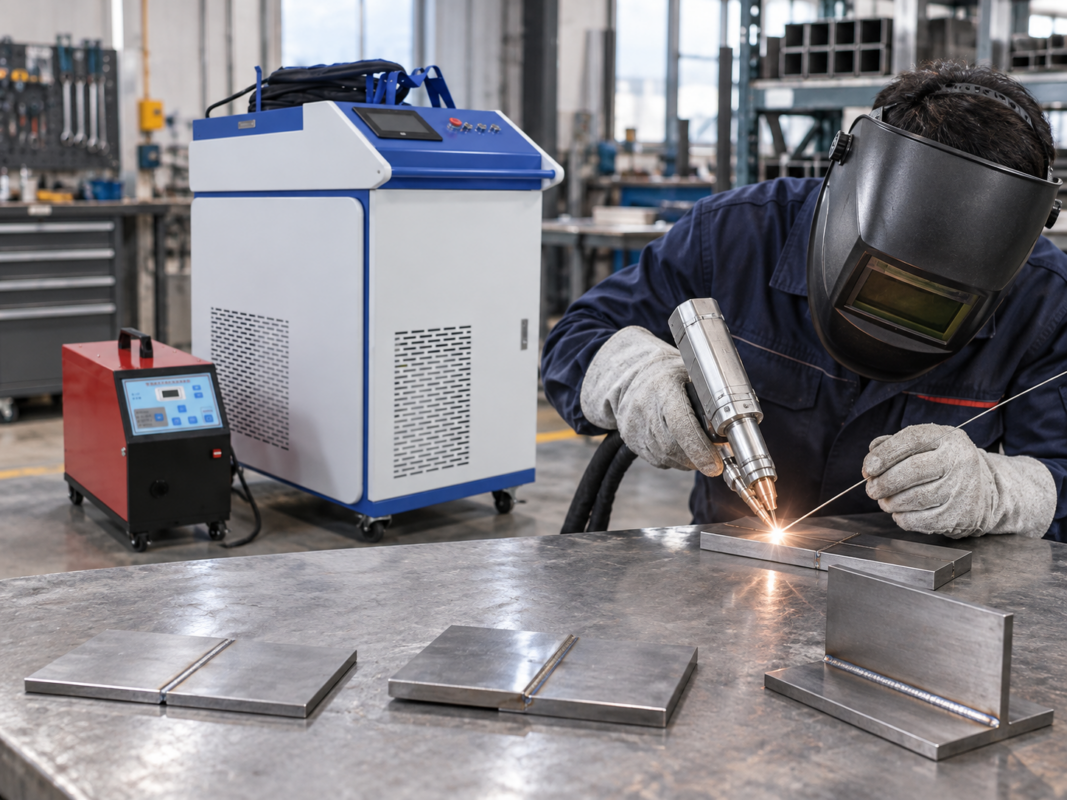
Filler wire can be useful when the approved joint needs added material, but it should not hide uncontrolled fit-up. Test priority parts with and without wire where relevant. Confirm compatible wire sizes, rollers, guides, adjustment range, supplied accessories and local wire availability.
Welding head, cables and optional functions
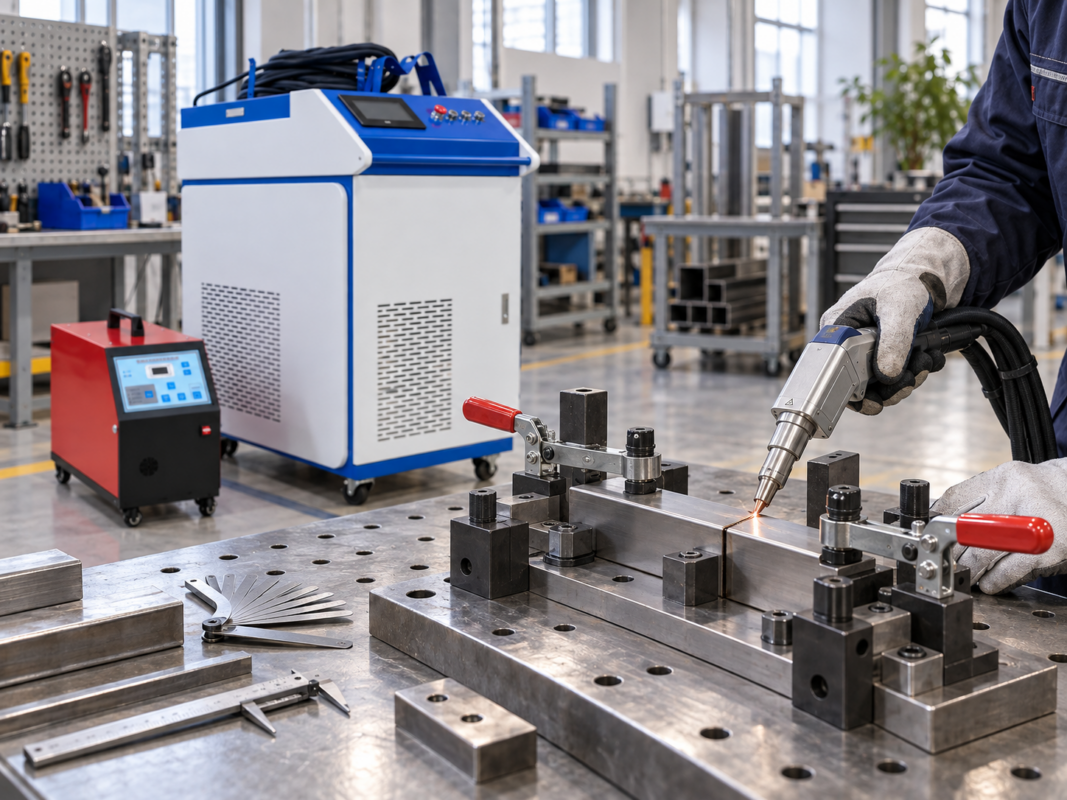
An operator should handle the welding head on actual frames, cabinets, corners and restricted joints. Check balance, grip, nozzle access, cable movement and usable reach. Where welding, cleaning or cutting functions are offered together, the quotation should list the exact head, nozzles, controls, changeover procedure and training supplied for each mode.
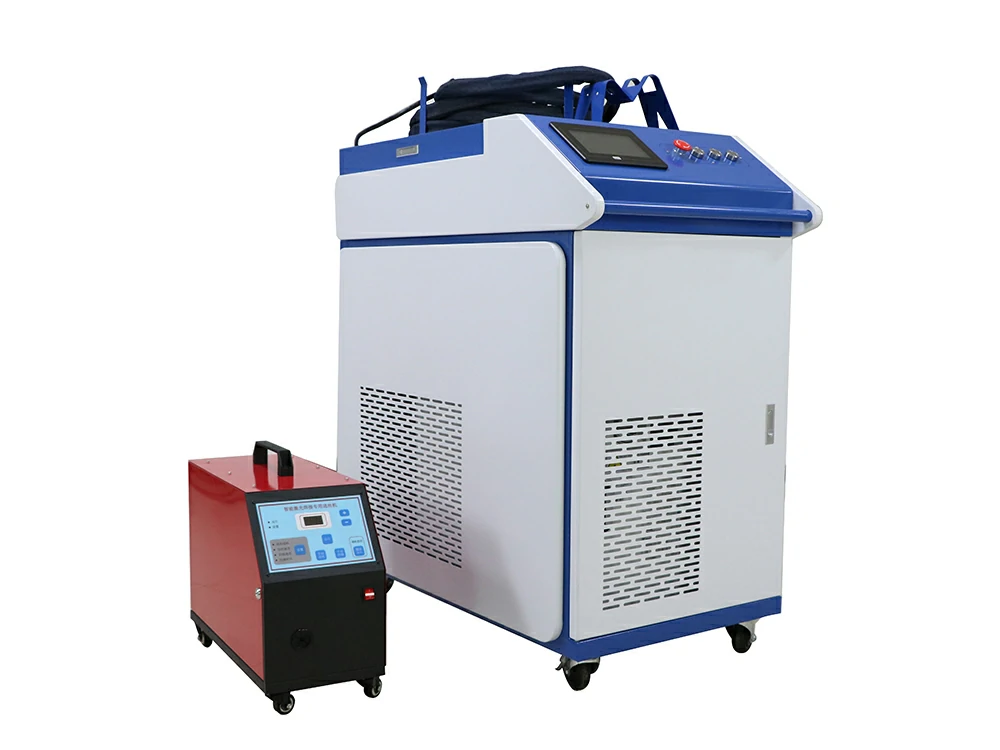
Confirm the exact laser source, head, cooling unit, feeder and supplied accessories in writing; a product image alone does not define the delivered configuration.
View Fiber Laser Welding Machines
4. Confirm Site Services and Safe Installation
A machine can pass an application trial and still be unsuitable for the intended workshop if the site cannot support it. The final proposal should state what the equipment requires and which installation work remains the buyer’s responsibility.
Electrical supply and utilities
Confirm voltage, phase, frequency, connected load, protection, isolation and earthing requirements for the complete configuration. Include the chiller, wire feeder, extraction and any supporting equipment rather than checking only the laser source. A qualified electrician should review the proposed connection and distribution-board capacity.
Shielding-gas type, pressure, flow-control equipment and cylinder or bulk-supply arrangements should also be written into the site plan. Generator or backup-power compatibility should be confirmed rather than assumed.
Controlled area, reflections and extraction
The installation needs a task-specific risk assessment covering controlled access, barriers, warning systems, emergency procedures, reflective surfaces and protective equipment suitable for the exact laser system. The workpiece and nearby metal can create reflection paths, so the workstation layout should be reviewed by a competent person before production begins.
Fume extraction must suit the metals, coatings, oils and contamination being processed. The South African Occupational Health and Safety Act provides broad legal context for workplace safety and the use of plant and machinery; machine-specific controls should come from the supplied documentation, the risk assessment and competent safety guidance.
Site-readiness check
Do not approve delivery until the proposed machine location, electrical connection, extraction, gas supply, access control, operator position, cable route and maintenance clearance have been reviewed together.
5. Run a Representative Application Trial
The application trial is where a general product claim becomes evidence for a specific workshop. Use real production parts with normal preparation and realistic variation, not only clean flat plates prepared specially for the demonstration.
Before the trial
Send the job matrix, sample list, expected gaps, access restrictions and acceptance criteria. Ask which exact configuration will be used.
During the trial
Record material, thickness, joint, preparation, filler status, settings, travel approach, cycle time and any finishing required.
After each weld
Inspect the sample using the agreed method. Mark accepted and rejected results and keep photographs or video with the process record.
Before approval
Confirm that the quoted source, head, chiller, feeder and accessories match the tested setup. Record any differences and require a new trial when a material change affects the result.
Measure the complete cycle, not only arc-on time
Include loading, positioning, tacking, welding, inspection, unloading and post-weld finishing. A faster weld may add little value if fixturing remains slow, while reduced distortion or polishing can justify the process even when welding speed is not the only gain.
Prepare Parts for an Application Review
Send the material list, thickness range, joint photographs, expected fit-up and acceptance method before arranging a demonstration.
| Request a Demonstration | View Machine Category |
6. Compare the Written Quotation and Support Scope
Two quotations with similar headline descriptions may include different equipment, installation work, consumables, training and service responsibilities. Compare the complete supplied scope against the same checklist.
| Selection Item | Evidence to Request | Clarify Before Order |
|---|---|---|
| Application fit | Accepted samples and trial record for priority jobs | Materials, joints or positions not demonstrated |
| Core configuration | Exact laser source, welding head, controller and cooling system | Any difference between trial and delivered machine |
| Wire feeding | Feeder model, wire range, rollers, guides and accessories | Local wire availability and setup responsibility |
| Site services | Electrical, gas, extraction and environmental requirements | Work excluded from the supplier scope |
| Safety package | Machine documentation, supplied controls and protective-equipment guidance | Buyer responsibilities for the controlled area and risk assessment |
| Training | Topics, location, operator count and practical sign-off | Follow-up support after initial production |
| Consumables | Initial quantity, replacement references and lead route | Items treated as normal wear rather than warranty |
| Warranty and service | Covered components, exclusions and claim process | Remote support, site service and escalation route |
| Acceptance | Installation, commissioning and handover record | Who signs off and how unresolved issues are recorded |
Training should create a repeatable process
Useful training covers preparation, parameter selection, head handling, wire feeding, weld inspection, alarm response, routine maintenance and safe shutdown. An approved parameter library can then be built by material, thickness, joint, filler condition and fixture setup.
CNC Laser Durban’s technical support information provides a route for discussing setup, servicing, repairs and preventative maintenance. The final quotation should still define the support included with the specific order.
Frequently Asked Questions
Should the highest available power be chosen?
Not automatically. Power should follow accepted trials on regular materials, joints and production speeds. Extra capacity is valuable only when it solves a documented requirement without creating unnecessary site demand or cost.
When is a wire feeder worth including?
Include it when the approved joint needs filler material or controlled reinforcement. It should be demonstrated on the actual part and should not be used to compensate for uncontrolled gaps or poor preparation.
Is a 3-in-1 machine automatically better value?
Only when the workshop has a real requirement for each supplied mode and the changeover, accessories, controls and training are clearly documented. Unused functions should not outweigh application fit, serviceability or support.
What should be recorded during the application trial?
Record the exact configuration, material, thickness, joint, preparation, gap, filler status, settings, cycle time, inspection method and result. Keep photographs or video of accepted and rejected samples.
What must be written into the quotation?
The quotation should identify the exact source, head, cooling system, feeder, accessories, site requirements, training, consumables, warranty scope, installation responsibilities and acceptance process.
Who should approve the installation plan?
The supplier, workshop owner, intended operator and appropriate electrical and safety specialists should review the plan within their areas of responsibility. Machine-specific documentation and the site risk assessment should guide the final controls.
Related CNC Laser Durban Resources
Laser Welding MachinesReview the current welding, cleaning and cutting machine category. |
Technical SupportDiscuss setup, servicing, repairs and preventative maintenance. |
Application ReviewSend parts, materials and site details before requesting a quotation. |
Make the Decision from Evidence, Not Headline Specifications
A suitable system should solve a defined production problem, pass an agreed trial on representative parts and fit the workshop’s electrical, extraction, gas, safety and maintenance arrangements. The quoted machine must match the tested configuration.
The next step is to prepare the job matrix and sample pack. That gives the supplier enough information to recommend a configuration and gives the buyer a clear basis for comparing the result.
Request a Demonstration or Application Review
Send the material list, thickness range, joint photographs, normal fit-up, batch requirements and available site services so the application can be reviewed before a configuration is proposed.
| Request an Application Review | View Laser Welding Machines |